








Proof, Not Hype: Real World AI at ESPC26

Contents
Introduction
For the past few years, it has been almost impossible to talk about technology without talking about AI. We’ve heard plenty about what it could transform, what it could automate and how it might change the way we work.
Now that organisations are actually putting AI to work, the conversation is changing.
We saw this at EPPC26 earlier this year, where the focus had moved beyond whether organisations should be using AI. Instead, people were talking about how to use it responsibly, manage it effectively and make sure it delivers real value.
Looking through the ESPC26 programme, we can see that same shift. Alongside sessions exploring the latest developments across Microsoft technology, there are people sharing what they have learned from actually deploying, scaling and governing AI within their organisations.
That is something we’re looking forward to hearing more about in Amsterdam.
What does Copilot adoption really look like?
Deploying Microsoft 365 Copilot is one thing, but getting people to use it and find value in it is another.
In Lessons from the Trenches: Guerrilla Style M365 Copilot Adoption, Lindsay Shelton shares what happened when she stepped into a Copilot adoption initiative that was already underway, with limited internal support and no formal change management background.
Her approach involved finding power users, building relationships across the organisation and learning how to understand and improve usage. During that time, daily Copilot interactions grew from fewer than 1,000 to more than 14,000.
It’s a useful example because it comes from the reality of making adoption work inside an organisation, rather than how a perfect rollout might look on paper.
Moving beyond the Proof of Concept
At EVS Broadcast Equipment, the AI journey began with a Microsoft 365 Copilot Proof of Concept. It helped the company understand where Copilot could create efficiencies, but also raised questions around data access, confidentiality and governance.
In How EVS Scaled AI: From Copilot PoC to a Corporate Wide Governance Framework, Sonia Palumbo and Gaëtan Nicolaye share what happened next.
As AI usage grew, EVS introduced training, onboarding, guidelines and a wider governance model, including an AI Council and groups where departments could share experiences and explore new use cases.
It shows how quickly the AI conversation can change. Once you have proved something works, you have to work out how to make it sustainable across a much larger organisation.
Starting with the problem
There has been plenty of discussion about finding use cases for AI. We’re increasingly seeing examples where that thinking is turned around, starting with a real problem and asking whether AI can help solve it.
In RAG or GraphRAG, That Is the Question!, Negar Shahbaz shares a case study involving a large retail organisation struggling to keep its internal processes aligned with changing EU Carbon Border Adjustment Mechanism regulations.
The resulting solution uses GraphRAG, an Azure knowledge graph and a multi agent architecture to help evaluate processes against regulatory changes, identify potential issues and propose adjustments.
There is plenty of technical depth behind the solution, but what makes the case study particularly relevant is the clear business problem at its centre.
Learning from failure matters too
Real world AI experience does not only mean sharing success stories. As organisations deploy AI more widely, understanding how and why things can go wrong becomes increasingly important.
Nakshathra Suresh explores this from an unusual perspective in AI Failure Is Predictable: What Criminology Can Teach Enterprise AI.
Drawing on criminology and social science, the session looks at how human behaviour, organisational structures and incentives can contribute to AI failures. Through examples involving misuse, manipulation and hallucination driven errors, it asks whether some failures can be anticipated before they happen.
It is another reminder that responsible AI is about more than the technology itself. How people use these systems, and the environment in which they use them, matters too.
The AI conversation is changing
What excites the ESPC team about these examples is how grounded the conversation around AI is becoming.
Organisations have spent the past few years experimenting, and there is now much more real experience to learn from. People can share what happened after Copilot was deployed, what it took to move beyond a Proof of Concept, where AI has solved a genuine business problem and what they learned when things did not go as expected.
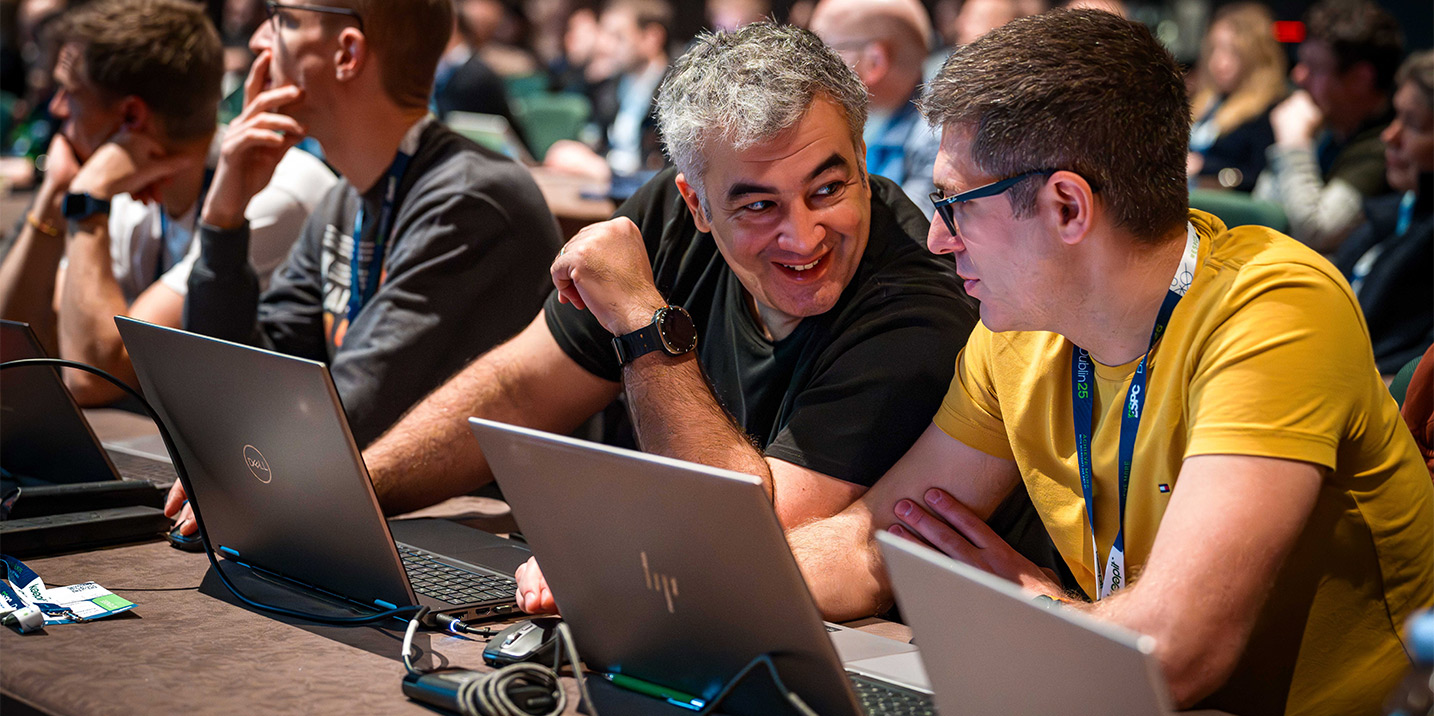
For us, this is also where being together in person becomes particularly valuable. You might hear someone describe a challenge that sounds very similar to one you are facing in your own organisation, but the learning does not have to end when the session does.
At ESPC, you can ask speakers questions after their sessions, continue the conversation during a networking break, visit Ask the Experts or meet other attendees who are working through similar challenges. Sometimes the most useful conversation can simply be finding someone who has already dealt with the problem you are trying to solve and asking them how they approached it.
There will be plenty to discover at ESPC26 about where Microsoft 365, Copilot, agents, AI and the wider Microsoft ecosystem are heading next. But there is just as much value in learning from people who are already putting these technologies to work.
That is what we’re looking forward to in Amsterdam: hearing what people have learned, asking questions and sharing experiences with others who are working through many of the same challenges.
Tags
trending posts